
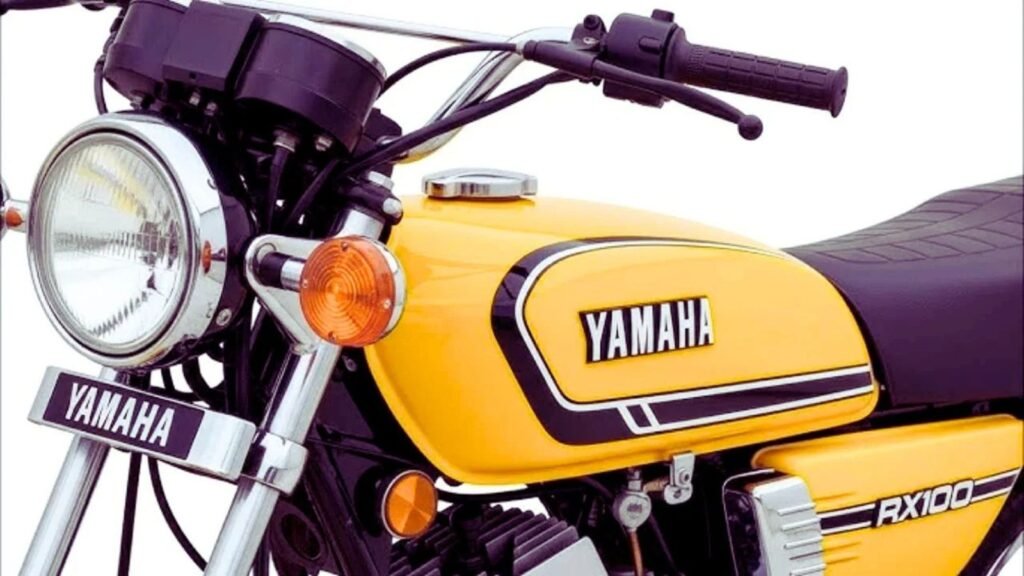

The Yamaha RX 100 is more than just a motorcycle; it is a cultural icon that changed the way people in India and many other markets viewed small-capacity bikes. Positioned originally as an entry-level performance commuter, the RX 100 carved out a reputation that far exceeded its modest engine size. It was built for riders who valued raw mechanical simplicity, quick throttle response, and an engaging riding experience that felt alive every time the engine fired up.
Even decades after production ended, the Yamaha RX 100 continues to enjoy legendary status. Its popularity has not faded with time; in fact, demand has grown stronger in the used motorcycle market. Enthusiasts, collectors, and everyday riders still seek it out for its lightweight design, unmistakable two-stroke exhaust note, and thrilling acceleration. In a world now dominated by complex electronics and strict emission regulations, the RX 100 stands as a reminder of a purer era of motorcycling.
What makes the Yamaha RX 100 special is not just nostalgia. It is the combination of simple engineering, high power-to-weight ratio, easy maintenance, and a riding character that modern motorcycles struggle to replicate. Even today, the RX 100 remains relevant because it delivers an honest, mechanical connection between rider and machine—something many riders still crave.
Engine and Efficiency
At the heart of the Yamaha RX 100 lies a compact yet spirited 98 cc, single-cylinder, air-cooled, two-stroke engine. This engine was designed during a time when performance was achieved through lightweight construction and efficient combustion rather than electronic aids. The motor produces approximately 11 PS of maximum power at 7,500 rpm and a peak torque of 10.39 Nm at 6,500 rpm.
While these figures may seem modest on paper, they tell only part of the story. The true strength of the Yamaha RX 100 lies in how quickly it delivers power. The two-stroke design allows for rapid throttle response, making the motorcycle feel lively and energetic, especially in city riding conditions. Acceleration is sharp, and the engine pulls eagerly through the rev range, giving riders an engaging and fun experience.
Power is transmitted to the rear wheel through a 4-speed manual gearbox. The gear ratios are well-matched to the engine’s power band, allowing riders to make the most of the available torque. Shifts are mechanical and direct, reinforcing the raw, analog feel that defines the Yamaha RX 100.
In real-world usage, the RX 100 delivers a fuel efficiency of approximately 35 kmpl, depending on riding style and maintenance condition. While this figure may not compete with modern four-stroke commuters, it is respectable given the motorcycle’s performance-oriented nature. The fuel tank has a capacity of around 10 liters, providing a practical riding range of roughly 300 to 350 kilometers on a full tank.

The carbureted fuel system plays a significant role in the motorcycle’s character. Proper carburetor tuning ensures consistent performance and efficiency. Because of its simple mechanical setup, the Yamaha RX 100 responds well to regular maintenance, rewarding owners with reliable performance over long periods.
Dimensions and Usage
One of the biggest advantages of the Yamaha RX 100 is its compact size and lightweight construction. These factors contribute significantly to its ease of use, especially in congested urban environments.
The motorcycle measures approximately 1,965 mm in length, 740 mm in width, and 1,040 mm in height. Its wheelbase of around 1,240 mm strikes a balance between straight-line stability and agile cornering. This compact footprint makes the RX 100 easy to maneuver through traffic, narrow lanes, and crowded parking spaces.
With a curb weight of just about 94 kg, the Yamaha RX 100 feels incredibly light by modern standards. This low weight enhances acceleration, braking, and overall handling. Riders of different experience levels find it easy to control, whether navigating busy city roads or enjoying a spirited ride on open stretches.
The seat height of approximately 765 mm ensures that most riders can place their feet flat on the ground, adding confidence during stop-and-go traffic. Ground clearance stands at around 136 mm, which is sufficient for typical urban roads and speed breakers.
In terms of usage, the Yamaha RX 100 was originally designed as a daily commuter with a sporty edge. It excelled at short city rides, quick errands, and even longer weekend trips when needed. Its lightweight nature and responsive engine made it enjoyable in almost any riding scenario.
Safety and Features
The Yamaha RX 100 reflects the design philosophy of its era, focusing on simplicity rather than advanced electronics. Safety and features are basic but functional, aligning well with the motorcycle’s lightweight construction and power output.



Braking duties are handled by drum brakes at both ends. The front brake measures approximately 130 mm, while the rear brake is around 110 mm. While drum brakes may seem outdated today, they are adequate for the RX 100’s low weight and modest top speed. When properly maintained, the braking system offers predictable stopping power for everyday riding.
The suspension setup consists of telescopic front forks and twin rear shock absorbers. This configuration provides a comfortable ride over typical city roads while maintaining stability during spirited riding. The suspension tuning complements the motorcycle’s lightweight chassis, allowing it to absorb bumps without feeling overly soft.
Instrumentation on the Yamaha RX 100 is minimalistic. The analog instrument cluster includes a speedometer, fuel gauge, and basic indicator lights. There are no digital displays or electronic aids, reinforcing the bike’s mechanical purity.
Lighting is provided by a halogen headlamp at the front and a halogen tail lamp at the rear, along with conventional turn indicators. The electrical system operates on a 6-volt setup, which was standard at the time of production. While basic, this system is reliable and easy to maintain.
Price and Ownership
One of the most fascinating aspects of the Yamaha RX 100 today is its strong resale value. Despite being out of production for many years, it commands impressive prices in the used motorcycle market.
In India, the price of a Yamaha RX 100 typically ranges between ₹80,000 and ₹200,000, depending on factors such as condition, originality, and location. Motorcycles that retain original parts, factory paint, and minimal modifications often fetch premium prices. Fully restored examples can sometimes cost even more, reflecting the bike’s collectible status.
Ownership costs remain relatively low due to the motorcycle’s simple mechanical design. Routine maintenance involves tasks such as carburetor cleaning, spark plug replacement, air filter cleaning, and clutch adjustment. These procedures are straightforward and inexpensive compared to maintaining modern motorcycles with complex electronics.

Spare parts availability is still good, thanks to a strong aftermarket ecosystem. Many mechanical components are easily sourced, although original factory parts are becoming increasingly rare and expensive.
Insurance premiums for the Yamaha RX 100 are affordable, and overall ownership expenses remain manageable. For enthusiasts who enjoy working on their motorcycles, the RX 100 offers an excellent platform for learning and customization.
Yamaha RX 100 Conclusion
The Yamaha RX 100 stands as one of the most iconic motorcycles ever produced in its segment. Its combination of a lively 98 cc two-stroke engine, lightweight construction, agile handling, and simple mechanical design makes it a timeless machine that continues to attract riders even today.
What truly sets the Yamaha RX 100 apart is its ability to deliver pure riding enjoyment without relying on modern technology. It offers a direct connection between rider and machine, rewarding skill, maintenance, and mechanical understanding.
For riders who appreciate old-school engineering, responsive power delivery, and a motorcycle that feels alive on every ride, the Yamaha RX 100 remains an unmatched choice. Its enduring popularity, strong resale value, and legendary status ensure that it will continue to be celebrated for generations to come.